Mustard, Tuna, Foil, and Best Practices

To all cool dads out there,.png

My theory is that everyone has a few things that they ALWAYS buy at the grocery store…whether you need them or not. It isn’t on your list-you still buy it. You bought it last week-still feels like you might be out, so you buy more. For me, it is Mustard and Tuna. If I am not extremely careful, I will have 20 cans of tuna in my pantry, and several full bottles of mustard.

For my grandmother, it was foil-I am still using the rolls (and rolls) that she gave me over three years ago.

While I was making dinner the other night, I began to think about this phenomenon-and started to wonder if I hoard strategies like I hoard mustard.

I think I do. I am drawn to the same strategies over and over-in professional learning settings, when I work with students, when I work with teachers. I think we all have our “go-to’s”: the strategies that we know work, have practiced and perfected, used and abused.

As we grow our practice and improve our craft, it is necessary to keep our proverbial pantries stocked with staples-things we know our students will need, proven methods that build skills and help students succeed.

We also need to be careful, that we don’t only focus our own growth in areas that we are already “stocked up”, or with strategies that do not benefit our students.

To my role model.png

Our district goal-setting process pushes us to set stretch goals. Goals should make us better educators and move our practice in ways that will impact our students. It is easier to set our sights on a goal that is within reach, requires more action but little learning, or is already within scope of our current abilities.

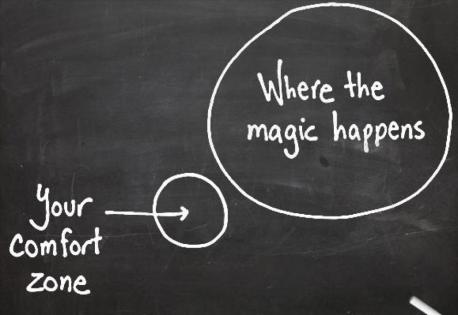
To grow we have to get out of our comfort zone.
AAEAAQAAAAAAAAkOAAAAJDY4NDFkOTRjLTBjMjYtNDlhNS1hNDFjLTk4ODJiNjNiN2Q5Mg.jpg

We have to set goals that fill our pantries with the things we can use to feed our students,  meet the needs of our campus, and  support our teams. There is no need to stock up on tuna and mustard, especially if there is no one in your house that will eat it.

I’m still learning…new things…

-ash


What Are You Looking At?

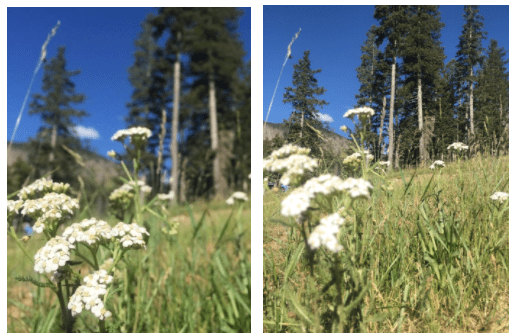
This summer I got some #adventure time with my hubby-who always indulges me with zip-lining, an activity which believe to be the perfect balance of safety and risk!  As I went through the pictures there were these two that caught my attention and brought me back to the book study that we just launched with my friends at Sigler Elementary (@SiglerStars #SiglerNation) on Student Voice: The Instrument of Change.

Screen Shot 2017-07-16 at 8.14.18 PM

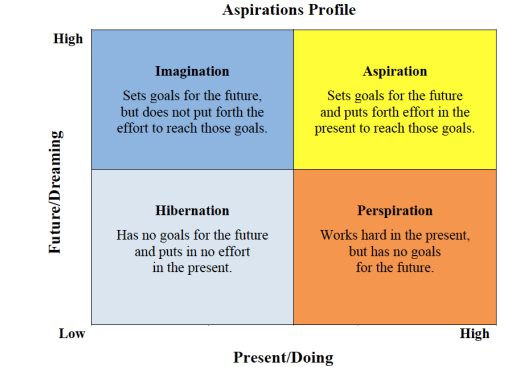
These two pictures caught my attention, probably because they are the same picture, with a different focus. As I flipped between the two (honestly trying to decide which to post) I was reminded of the Aspirations Profile developed by the Quaglia Institute. In our current study of Student Voice, we are thinking about our students-but in examining these pictures, my thinking shifted to leadership.

Aspirations_Profile1_603.png

The Aspirations profile provides four descriptors in relation to our future/dreaming and our present/doing.  During this study, I have been reflecting on my own work-and trying to identify  areas that aren’t hitting in the Aspirations Quadrant.

When I looked at the pictures, and then at the Aspiration and Persperation Quadrants-what I notice is that they are both identical, aside from the focus.

What we are looking at changes the picture. 

Despite copious sit-com depictions, the school leaders I know are the hardest working, most dedicated (sometimes to a fault) people I have ever met. They come early, stay late, go to sleep thinking about their schools/students and wake up with list of things to accomplish. Work ethic or the “present/doing” is not generally our problem! However, if we aren’t careful, it is often easy to get “stuck” in the cycles of perspiration as the ever-increasing requirements flood in email by email.

As the school year launches, I am going work on  keeping my focus on both the present and the future, priorize and negotiate my daily tasks in light of the dream or the vision for the future for my district, my department, and my personal goals.


My analogy: Riding a Bike (because as an English Teacher in my heart I always need an analogy)

  • Hibernation: Never getting on the bike.

  • Imagination: Sitting on the bike, dreaming of all the awesome places you could go…never putting your feet to the pedal.

  • Perspiration: Stationary Bike

  • Aspiration: Gettkng on the bike, pedaling, looking ahead, and moving down the road.

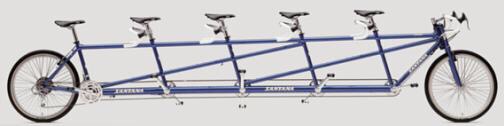
And I think maybe GREAT LEADERS ride these “fancy” bicycles…

Check out more from the Quaglia Institute: http://quagliainstitute.org/qisa/framework/profile.jsp

19702148_10155732064384162_3951041480169442576_n

As always…I am still learning.

-Ash

Reflections: Learning Forward Texas 2017

Learning Reflections (1)

One of my favorite lessons was always Note-taking 101.

Student (every single year): Ms. Helms, are we going to take notes over how to take notes?
Me: Yes!!! (said with all three exclamation points)

Maybe this is why I get so excited about a professional learning conference about professional learning! Learning Forward Texas is such a powerful two days of learning with like-minded educators sharing a focus and passion for building capacity in others. It is a beautiful thing.

First of all, I love the way this conference is organized to all an entire day with a thought leader to explore their work and expand our thinking. I am super picky about sessions, and full day session can be scary, however, these two choices seemed obvious for me: the topics are close to my heart, connect to my work, and got me in the room with two guys who I respect and want to learn from. I chose to spend my two days with Thomas Van Soelen & George Couros.

Day Two, First: George Couros, Innovator’s Mindset

I am still mulling this session over in my brain and finding little things that resonate and connect (this post is two weeks post-learning). My framework for thinking about innovation was challenged-as I have always equated innovation with invention-which was a misconception on my part that I am glad is cleared up:

From Wikipedia:

The term innovation derives from the Latin word innovatus, which is the noun form of innovare “to renew or change,” stemming from in—”into” + novus—”new”. Although the term is broadly used, innovation generally refers to the creation of better or more effective products, processes, technologies, or ideas that are accepted by markets, governments, and society. Innovation differs from invention or renovation in that innovation generally signifies a substantial positive change compared to incremental changes.

The last line of that definition poses the question I am still trying to answer for myself: How is my work and my thinking creating substantial, positive change? For students? For educators? For our system?

Day One: Thomas Van Soelen, Crafting the Feedback Teachers Need and Deserve

I applied some of my learning from Day Two to capture/curate my reflections on Day One using Storify. Check out my reflections and thinking: LFTX Day One-Storify

Don’t want to miss next year’s conference? Bookmark the Learning Forward Texas Website & Save the Dates: June 19-20, 2018.


2 Things Every Educator Can Learn From My Dad


Adobe Spark (80)

I was born a “daddy’s girl”, that is no secret or surprise to most who meet me or him. But as I have gotten older and wiser more reflective, there are so many ways that I see how being his girl has impacted my life and my practice as an educator.

When I was in second grade I couldn’t believe the amazing dollhouse he had “built” for my extensive collection of Strawberry Shortcake friends. What I didn’t know at the time, is that the three story mansion that stood before me was a discarded shack when he “saw” it for the first time. He saw it for what it could be: new carpet in every room, wallpaper in the kitchen, fresh coat of paint. All I saw was a masterpiece.

In middle school the church that our family pioneered built its first permanent structure. I am not sure how it happened, but my dad found out that a local bank was scheduled to be demolished. He saw this as an opportunity and worked out an agreement for our congregation to go in first to salvage all of the materials that could be repurposed: doors, lights, cove-base, ceiling tiles. It saved thousands of dollars, and built more than just a building-the work we did together built a culture.

My dad always sees the possible

As educators it is our job to see the possible: in students, in strategies, in our community, and in each other. We are in the business of taking students from where they are now to where they CAN be tomorrow. Good teachers look beyond the lack and see lightbulb moments. We invest in our practice and in our peers so we can move toward that possibility together.

Working in the possibility doesn’t mean we don’t acknowledge reality. We use data to inform our student-focused decisions. We are reflective about what is working in our classrooms/buildings/districts and make adjustments. We judiciously evaluate resources and strategies to ensure we are making the right choices for each student every day.  We use the now to create the not-yet.

My dad puts in the work to make the possible a reality. 

It is not enough to see possibility, we have to be willing to do the hard work. Igniting and uncovering potential in students requires laying a solid foundation of relationship and trust. Strategies, no matter what the effect size, take purposeful planning and thoughtful implementation to facilitate results for students. Reflective practice is not for the faint of heart-it requires daily self-evaluation, a willingness to try-try again, and the vulnerability to ask for help. We can’t just see possibility, we have to work  for it-work hard, work deliberately, and work collaboratively.

The stories I shared here show what he could do with “things”,  but before these or any other memories I have of him as an innovator-I remember the words to a song he sang to me and with me my whole life:

Adobe Spark (81)

On Father’s Day and everyday, I hope to be like my dad-seeing the possibility and potential every where I go, and in everyone I meet. And I plan to meet that vision with grit, determination, and elbow grease.

Happy Father’s Day Daddy! Love you Train Loads!

Third Time’s A Charm

This will be the third blog I have started. The two before were never published, never shared, and are lost behind a username I don’t remember that is connected to an email I no longer own.

Why try for three? In the past year I have learned more about learning, about leadership and about myself than I thought possible. To be honest, I have felt this way every year for the last fifteen years I have been an educator. This year is different (I always say that). This year I have been challenged to be more reflective, more intentional, more collaborative, more open-minded, more coachable, more resilient. After quite a bit of thought, I have decided that this “more” is going to require a China level risk (see About Page).

A China-Level risk requires leaving safety and comfort behind. This category of risk is get out of the box, be vulnerable, trust yourself, comfort-zone disrupting risk.

So here it is, my first post, but not my last. A place where I will figure things out as I go, try on some ideas for “size”, hopefully find a few good thought-partners, and remind myself that…

I’m still learning.